

Plenary Speakers
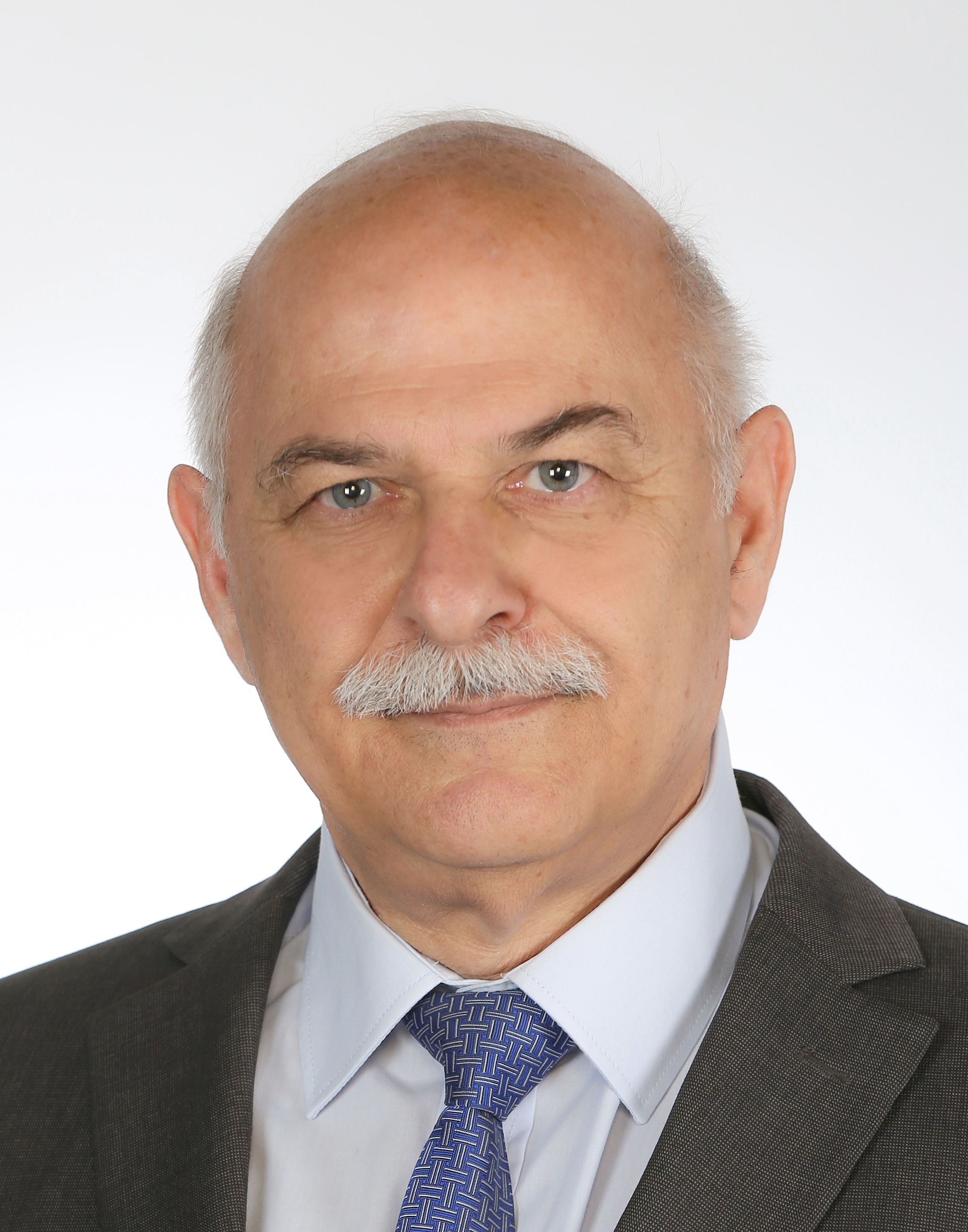 |
Soteris KALOGIROU Soteris Kalogirou is Professor at the Department of Mechanical Engineering and Materials Sciences and Engineering of the Cyprus University of Technology, Limassol, Cyprus. In addition to his Ph.D., he holds the title of D.Sc. He is a Fellow of the European Academy of Sciences, Founding Member of the Cyprus Academy of Sciences, Letters and Arts, Member of Academia Europaea and Fellow of International Artificial Intelligence Industry Alliance. For more than 35 years, he is actively involved in research in the area of solar energy and particularly in flat plate and concentrating collectors, solar water heating, solar steam generating systems, desalination, photovoltaics, geothermal energy and absorption cooling. He has a large number of publications in books, book chapters, international scientific journals and refereed conference proceedings. He is Editor-in-Chief of Renewable and Sustainable Energy Reviews, Editor-in-Chief Emeritus of Renewable Energy and Honorary Editor of Energy, and Editorial Board Member of another twenty six journals. He is the editor of the book Artificial Intelligence in Energy and Renewable Energy Systems, published by Nova Science Inc., co-editor of the book Soft Computing in Green and Renewable Energy Systems, published by Springer, editor of the book McEvoy’s Handbook of Photovoltaics, published by Academic Press of Elsevier and author of the books Solar Energy Engineering: Processes and Systems, and Thermal Solar Desalination: Methods and Systems, published by Academic Press of Elsevier. |
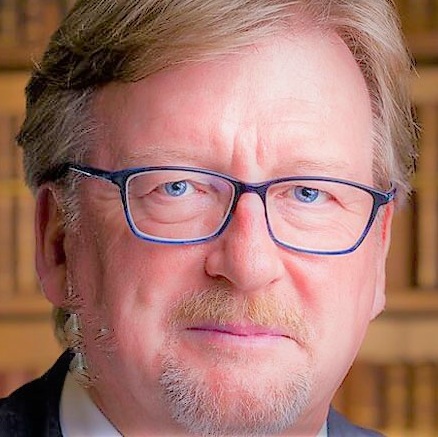 |
Brian NORTON Brian Norton is Emeritus Professor of Solar Energy Applications at TU Dublin. He is currently President of the European Sustainable Energy Innovation Alliance and a Vice-President of the European Academies Science Advisory Council. His research is on the applications of solar energy particularly in the context of buildings. It has led to innovations in photovoltaics, glazing, daylighting devices and solar water and air-heating. He is particularly associated with conceiving and developing the use of phase change materials to cool photovoltaics and with patented commercialised innovations in vacuum glazing and thermophotovoltaics. He remains active in these areas of research. He is Visiting Professor at several universities internationally, supervised over seventy doctorates and his research outputs have received over 18,000 citations with an h-index of 70. He is a Member of, and immediate-past Secretary for Policy and International at, the Royal Irish Academy, a Fellows of the Irish Academy of Engineering, Honorary Member of the Daylight Academy, and Honorary Fellow of the Chartered Institute of Building Services Engineers. His honours include an Honorary Doctorate from Universite de Technologie de Troyes, France, the CIBSE Napier Shaw Medal; Energy Institute’s Roscoe Award, American Association of Publishers PROSE Award for the book “Comprehensive Renewable Energy”, Lifetime Achievement Award from the Solaris Conference series and “Solar Energy” Journal Best Paper Award in Photovoltaics. Professor Norton was Head of Energy Research at Tyndall National Institute, a Research Professor at University College Cork and Professor of Solar Energy Applications at TU Dublin. He was also a Principal Investigator in MaREI, the Irish national research centre for Energy, Climate and Marine. He was President of (what is now) Technological University Dublin for sixteen years and prior to that Dean of Engineering at Ulster University. |
 |
Brigitte HASEWEND Brigitte Hasewend is founding and acting Director and Member of the Governing Council of the European Sustainable Energy Innovation Alliance – ESEIA. In November 2023 she was appointed Member of the EIT Climate-KIC Association Governing Board. ESEIA was founded in 2009. The Alliance currently has 22 member organisations, HEIs, research organisations, and businesses. In this executive capacity, Brigitte has been responsible for devising the ESEIA Strategy 2034 in the context of the European Clean Industrial Deal. In March 2023 she published a position paper on the future FP10 R&I Funding Programme. In fall 2022, she started a new ESEIA-TU Graz lecture series entitled Climate Survival Campus for public debate on climate-friendly solutions. Together with her team, Brigitte Hasewend has also won a number of large-scale Horizon R&I proposals with cross-sector partners from all over Europe and from neighbouring countries. Since 2013 Brigitte Hasewend has worked for the European Commission as expert evaluator for Horizon projects. She was Vice-President of the Supervisory Board of Joanneum Research ForschungsGesmbH from 2014-17 and has headed the International Strategic Research Partnerships at TU Graz for many years. Before re-joining TU Graz back in 2007 Brigitte Hasewend had spent 10 years living and working in Brussels at DG Research of the European Commission and at the Academic Cooperation Association (ACA). In her early career Brigitte Hasewend had started up the International Relations Office at TU Graz (1991-96). |
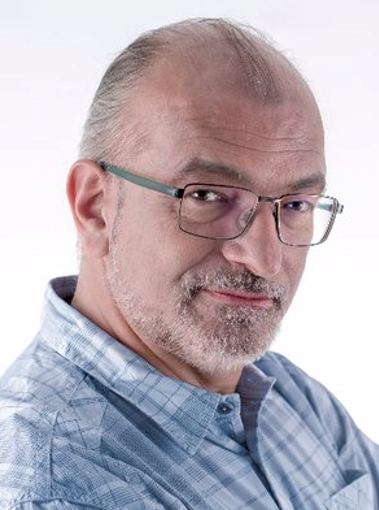 |
Neven DUIC Neven Duić is Professor in Energy Planning, Policy and Economics since 2001, at Power Engineering and Energy Management Chair, Department of Energy, Power Engineering and Environment, Faculty of Mechanical Engineering and Naval Architecture, University of Zagreb, Croatia. He is vice-president of Croatian Academy of Engineering and Chair of organizing Committee of CAETS 2023. He has been member of International Scientific Committee of Dubrovnik Conference on Energy, Water and Environment Systems since 2003 and chair of its Local Organizing Committee since 2007. He is co-Editor of Energy Conversion and Management, subject Editor of Energy, Editorial Board member of Applied Energy, member of regional editorial board of Thermal Science Journal and Editor-in-Chief of Journal of Sustainable Development of Energy, Water and Environment Systems. His research covers areas of energy planning of energy systems with high penetration of renewables, sustainable communities, energy policy, energy economics, mitigation of climate change, energy efficiency and combustion engineering. |
 |
Viorel BADESCU Viorel BADESCU is affiliated Professor at Department of Applied Thermodynamics and Candida Oancea Institute of National University of Science and Technology POLITEHNICA Bucharest, Romania. His mainstream scientific contributions consist of more than 300 papers and 40 books related to various fields in science and engineering. Most of his research areas refer to terrestrial and space solar energy applications, including research on photo-thermal energy conversion by flat plate collectors and solar power plants, the physics of radiation, photovoltaic conversion of solar energy and solar radiation properties and solar radiation distribution and forecasting. Other fields of interest are statistical physics and thermodynamics, the physics of semiconductors, and the optimal control of thermal engineering processes. He theorized on present-day Mars meteorology and Mars terraforming and on several macro-engineering projects. In joint work with Richard B. Cathcart he theorized on stellar engines. He was/is Associate editor and member of the editorial board of several international journals including Space Power, Energy, Renewable Energy and Journal of Energy Engineering. He is member of 8 scientific societies including the International Solar Energy Society and the European Astronomical Society. Since 2017 he is full member of the Romanian Academy. |
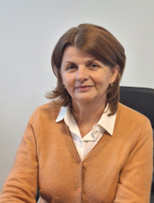 |
Florica MANEA Florica Manea is Profesor dr. habil. eng. and the Head of Research Centre in Environmental Science and Engineering from Politehnica University of Timisoara, Romania. Her scientific work has resulted in more than 175 scientific articles, 125 publications in impact factor journals, 15 national and international books/ chapters’ books and 4 national patents. |